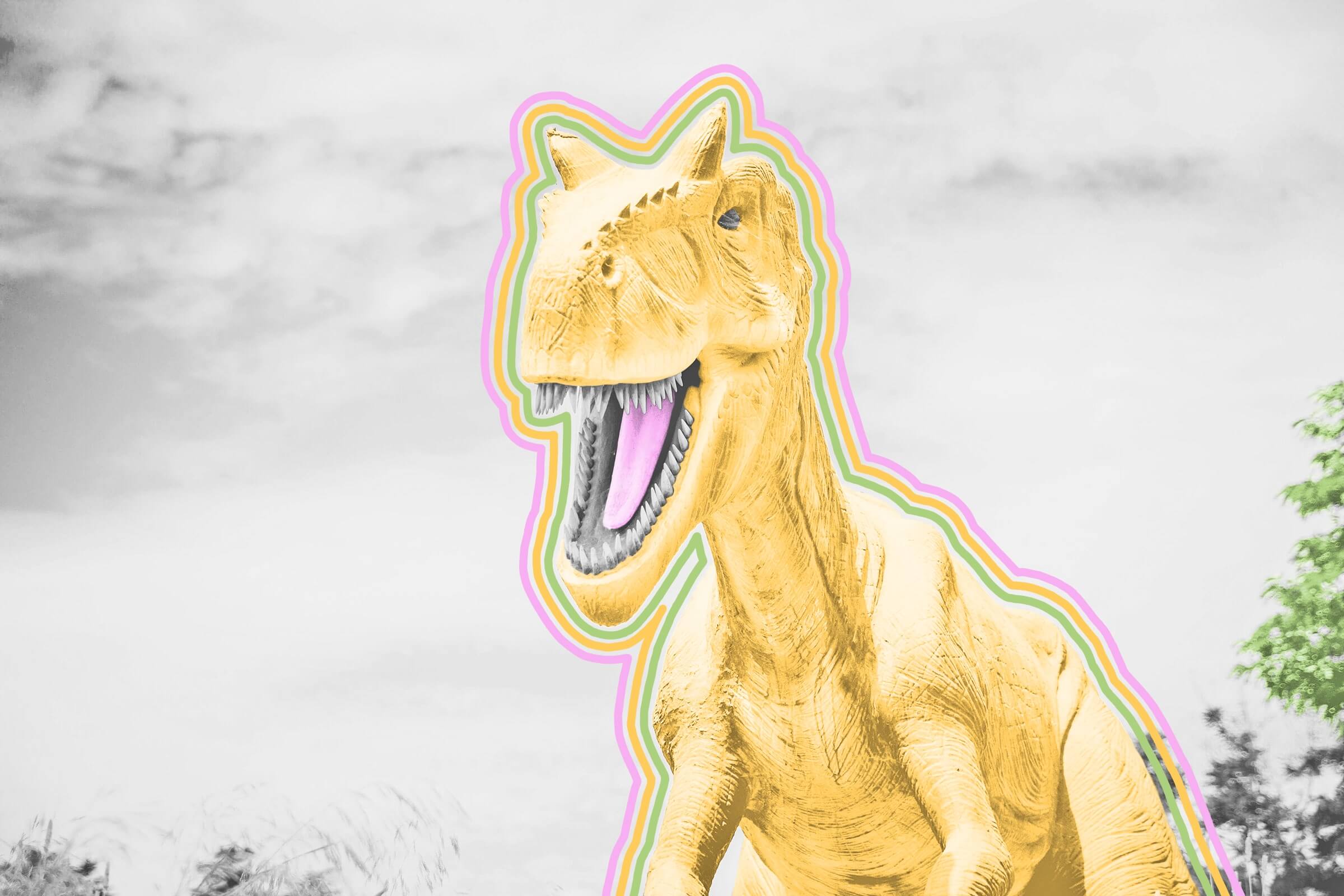
If asked what a dinosaur sounded like, many people would likely recall the roaring T. rex of Jurassic Park. However, that earth-shaking bellow seems to be a case of Hollywood exercising some creative liberty. While we don’t know what these reptiles really sounded like, since they mostly died out some 66 million years ago, scientists at least have some reasonable ideas based on the anatomical structures of well-preserved fossils, combined with studies of the dinosaurs and their close relatives that exist today.




Oops, incorrect!
It’s a fibAlthough it was long believed that non-avian dinosaurs lacked the flying capabilities of early birds and Pterosaurs, newer research has shown that other small, feathered dinosaurs evolved the ability for powered flight multiple times.
Yes, dinosaurs do still exist, in the form of birds, which branched off from non-avian dinosaurs around 160 million years ago. Although birds mainly produce noises via a soft-tissue organ called the syrinx, which has yet to be uncovered from a non-avian dinosaur fossil, many of our feathered friends also engage in closed-mouth vocalization, in which sounds are pushed out from a pouch in the neck area. Another modern animal that utilizes closed-mouth vocalization is the crocodile, which just so happens to share a common ancestor with dinosaurs. Given the family ties, it’s logical to conclude that some dinosaurs emitted something resembling the cooing of a dove, the booming of an ostrich, or the rumbling of a croc. Since larger animals with longer vocal cords produce lower-frequency sounds, it’’ also likely that enormous sauropods like Brachiosaurus delivered noises that, to our ears, would dip into an octave of infrasound — felt and not heard. On the other hand, the ear structures of the dinosaur-crocodile predecessor indicate a sensitivity to high-pitched noises, possibly the chirping of babies.
The field continues to evolve as new information comes to light; the recent discovery of the first known fossilized dinosaur larynx, from an ankylosaur, suggests these creatures were able to modify noises in a birdlike way despite the lack of a syrinx. And none of this even touches on the sound capabilities of hadrosaurs like Parasaurolophus, which almost certainly delivered a distinct call from the air passages that funneled through a conspicuous head crest. All in all, while a roar from a Jurassic-bred beast may have been the work of a Hollywood studio, there’s no movie magic needed to recognize that Earth’s prehistoric hills were alive with all sorts of reptilian sounds of music.

The first dinosaur to be named was ______.
Ready to reveal?
Confirm your email to play the next question?