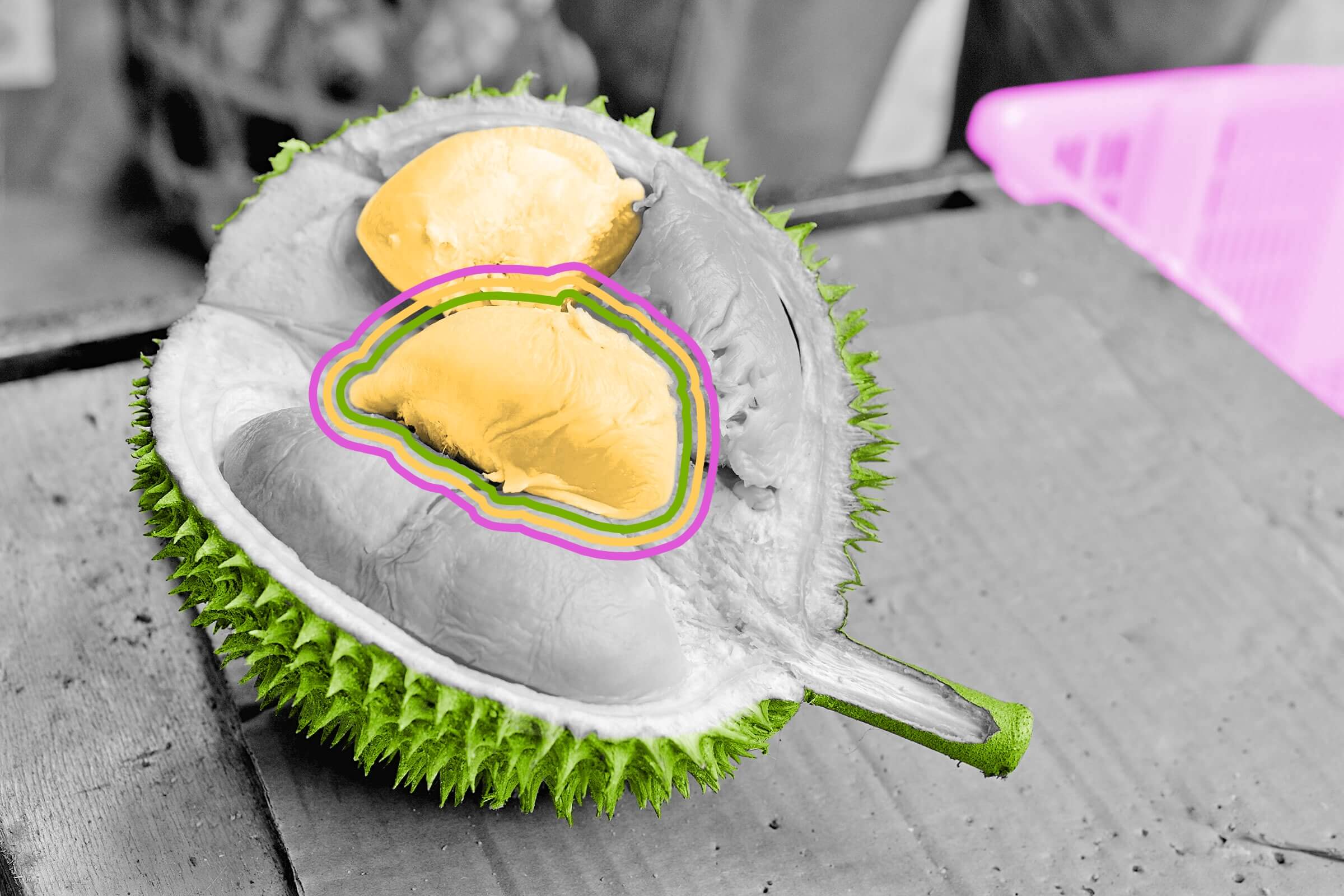
Most fruits tend to have sweet smells that delight our olfactory systems and make our mouths water. One, however, has a reputation for being so noxious that many people can’t make it past the rind to its sweet center — or even stand to be in the same room with it. The durian fruit, sometimes called the “king of fruit” in Southeast Asia (where it’s native), is so unpleasantly fragrant that it is banned from public transportation in Singapore. The spiky fruit is also often prohibited in hotels and outdoor public spaces in the region.




Oops, incorrect!
It’s a factEach pineapple is made up of many berries, which develop around a single core and eventually merge. Every scale on a pineapple was once a flower.
Describing the odor associated with durians is no easy feat. Some chefs and adventurous eaters have likened it to rotten eggs, pungent cheese, or sweaty gym socks, though lovers of the fruit say the smell is worth enduring for its creamy flesh, which tastes of caramel and almonds.
Yet the unpleasant aroma can be so overwhelming that it causes confusion and complaints. On at least two occasions in Australia, the fruit’s lingering scent was powerful enough to be mistaken for a natural gas leak. And in 2018, passengers on an Indonesian flight refused to board a plane loaded with more than 2 tons of durian in the cargo hold because of the intense smell. Scientists believe durian fruit’s nauseating aroma comes from a higher-than-usual number of genes for volatile sulfur compounds, which become “turbocharged” as the fruit ripens. However, the scent has a beneficial purpose for the plants themselves: It’s likely durian fruit trees evolved to use the sour stench as a way to attract animals that dine on the fruit and spread the seeds throughout wild areas.

The world’s largest tree fruit, ______, can weigh up to 100 pounds.
Ready to reveal?
Confirm your email to play the next question?